This is default featured slide 1 title

Go to Blogger edit html and find these sentences.Now replace these sentences with your own descriptions.

This is default featured slide 2 title

Go to Blogger edit html and find these sentences.Now replace these sentences with your own descriptions.

This is default featured slide 3 title

Go to Blogger edit html and find these sentences.Now replace these sentences with your own descriptions.

This is default featured slide 4 title

Go to Blogger edit html and find these sentences.Now replace these sentences with your own descriptions.

This is default featured slide 5 title

Go to Blogger edit html and find these sentences.Now replace these sentences with your own descriptions.

Showing posts with label Key generator. Show all posts

Wednesday, January 14, 2015

Metal Gear Solid Full Download + Crack key gen

Metal Gear Solid: Ground Zeroes and The Order: 1886 coming to LBP3!

Exclusive sneak peeks at planned content releases for Sackboy’s next adventure.

MGS SnakePose
Fans of LittleBigPlanet will know that we have long supported the previous titles in the series with a fantastic line-up of fun content and you can be rest assured that we plan to support LittleBigPlanet 3 with regular content updates too.
Some of you have been screaming to see more costumes for Sackboy’s new friends, so fresh from the Tokyo Game Show this past weekend, we are pleased to give everyone an exclusive teaser of some of our content plans for LittleBigPlanet 3.
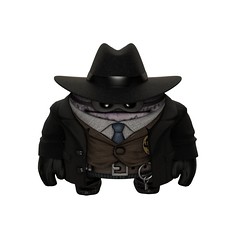
MGS SkullfaceLittleToggleFront

Metal Gear Solid: Ground Zeroes Costume Pack

Metal Gear Solid was one of the very first content packs that we released for the first LittleBigPlanet, so it seemed only fitting to team up with our good friends at Konami to bring you some brand new Metal Gear Solid: Ground Zeroes costumes for LittleBigPlanet 3!
Our upcoming costume pack makes sure that the entire gang can join in on the fun and we have costumes for Sackboy, OddSock, Toggle and Swoop! Did you ever imagine you would see Sackboy and friends in such cool costumes? Let us know which is your favourite in the comments below!

The Order: 1886 coming February 2015!

Eagle-eyed viewers may have noticed that we snuck a very brief cameo of Sir Galahad into our LittleBigPlanet 3 announcement trailer for E3 and many have been wondering if that meant we would be releasing a costume for him later.
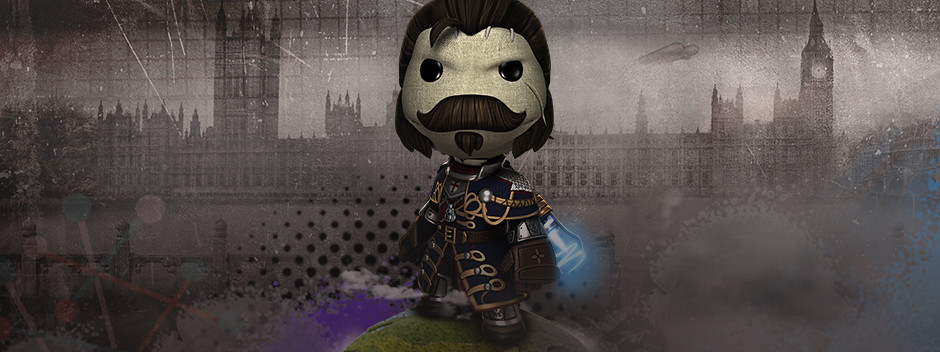
Galahad
MGS Skullface giant
What kind of mean teasers do you take us for? Of course we will be bringing Sir Galahad to LittleBigPlanet 3 with a special costume just for him! This costume will be arriving February 2015, just in time for the release The Order: 1886 next year!
We’re still working hard on finishing the game for its November release but we thought that this blog post would help whet your appetite for some of the exciting costume ideas we have for Sackboy and his new friends!
We hope you enjoyed this sneak peek of some of our content plans for LittleBigPlanet 3 after its release and be sure to stay tuned to the PlayStation Blog for more news and updates on LittleBigPlanet 3 including an exclusive insight into the Game Jam that we recently held with some of our top creators!
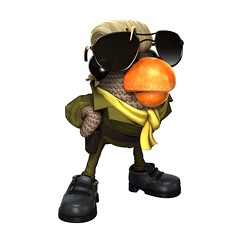
MGS KazuhiraWallpaperPose

Come and visit us!

Dragon Age: Inquisition full Download + crack key gen

The Sound and the Fury: What we listened to while writing
Dragon Age: Inquisition

ScreenshotWin32_0012_Final_WMIf you wandered into the Writer’s Pit while Inquisition was in full swing, you probably would’ve seen seven writers (and one editor) with headphones on, eyes fixed on monitors, typing furiously. Most of the writing happens when we can shut out the rest of the world and immerse ourselves fully in the story and characters. For many of us, this requires music. Often the music we listen to informs and even inspires what we write.
So, what was coming through those headphones when we wrote Dragon Age: Inquisition?

Sheryl Chee writer of Blackwall and Leliana
My characters’ voices don’t really establish themselves firmly until I’ve written one or two conversations for them. While I often have a good idea of their arc and personality, how they express themselves usually takes some poking around.
Music often helps get me into the right mindset, so when I set out in the early stages of planning and writing a character, I begin by building a playlist that evokes a certain mood. For instance, Leliana’s playlist is sweetly melancholic, with occasional moments of self-indulgent gloom and anger. Though it starts off with A Perfect Circle’s “The Noose,” it’s otherwise dominated by female voices like Suzanne Vega, Tori Amos, Anna Ternheim, Laura Veirs, Poe, and iamamiwhoami.
Blackwall was a bit of a special snowflake, and I ended up with two separate playlists by the time Inquisitionreached its final stages. From the start I knew that I needed a classic rock playlist for a certain furious energy that I find reflected in songs by Cream, Rush, and Led Zeppelin. His second playlist, on the other hand, was extremely eclectic, running a gamut of genres from folksy Americana to electronica. These songs, chosen mainly for their lyrics, came from artists including The Civil Wars, Kate Bush, Grizzly Bear, and Blaqk Audio, and were used as inspiration for the writing of his personal story.
For wildernesses and codex entries, I would usually listen to whatever fit my mood at the time. However, generally the more work I had to get done and the less time I had to do it in, the louder and faster the music got. There was a phase when I was listening to nothing but electronic body music. Then there was the time I was writing combat barks for Multiplayer. That was done to “Timber,” by Pitbull and Ke$ha on repeat.
It got the job done.

Tuesday, January 13, 2015

Shadow of Mordor Full Game + Crack Key generator

DT Exclusive | Building the World for Middle-earth:
Shadow of Mordor

The world of Middle-earth is massive, with books, several movies and a multitude of video games that all build on the lore of the world. The devs over at Monolith Productions recently finished their work on Middle-earth: Shadow of Mordor. As you may have noticed from our recent game review by game artists, we were really impressed with the work that went into the game and the attention to detail the artists put in to creating a game world that felt like it belonged in the Middle-earth universe. We recently got to talk with one of the Environment Artists Justin Walters who was part of the World Art Team at Monolith. You can read the interview below.
MIDDLE-EARTH: SHADOW OF MORDOR © 2013 Warner Bros. Entertainment Inc. Developed by Monolith.
Q
Were there any limitations that had to be put into place when thinking about designing the assets that would live in the environment?
Performance is always king and should be considered a top priority, even, if necessary, at the expense of visual aesthetics. As artists this can be a tough thing to concede at times, but a game that isn’t performing well distracts from the design and overall fun. For the World Art Team it became a balancing act between hitting our designated vertex counts for LODs while maintaining object silhouettes, keeping drawcalls reasonable and being frugal on the usage of expensive shaders, such as blend shaders.
Q
When laying out and creating assets for the levels, what did you have to keep in mind knowing that some of the objects will need to let the character climb?
This was a massive consideration on the project. We had internal documentation on player mechanics and how to make assets work with character movement. Everything in the game had to be compatible with the movement system. An interesting goal for this project was to not only create paths for successful movement, but to design the movement so it was interesting to control. Crafting climbing paths that would result in engaging player movement was a very fun and rewarding challenge.
Q
When creating the environments, knowing that the main character has wraith abilities did anything need to be done when creating the assets to account for those abilities?
This ties into the same idea behind making everything movement compliant. If an asset worked with standard movement mechanics it would work with wraith abilities usually. It was always something that had to be accounted for with regard to performance.
Q
What’s your process like when designing the levels, do you start with a rough layout and slowly build up detail? Or do you jump straight into creating the final layout?
I came onto the project at a point where most of the world had already been defined. When there was a need to revise an area, we would have to heavily consult and work with the design team to make sure their needs were met and any changes weren’t disruptive to any other design elements.
Q
Were there any specific guidelines in place like color palettes, for instance, that you had to follow to ensure that everything felt like it was part of Mordor and the Middle-earth Universe?
Like most productions we would start off working from color palettes that were provided from the concept team. From there we would adjust as needed until everything fit and felt authentic to the world as it was being realized in the engine. At Monolith we had frequent World Art Team critiques and would get regular feedback as to whether or not we were heading in the right direction. Shadow of Mordor’s Art Director, Philip Straub and Lead Environment Artist, Eric Holman, was exceptionally good with color and helped steer the ship in the right direction
MIDDLE-EARTH: SHADOW OF MORDOR © 2013 Warner Bros. Entertainment Inc. Developed by Monolith.
Q
When looking for inspiration, did you watch the Lord of the Rings and or Hobbit movies, or did you also look elsewhere for inspiration?
I personally really relished the opportunity to get to work in the Middle-earth universe. I re-watched Peter Jackson’s Lord of the Rings trilogy and all of those fantastic behind the scenes documentaries that accompanied them. I’ve always found those particular behind-the-scenes documentaries extremely inspiring. As a studio we all took a trip to see an advanced screening ofThe Hobbit: The Desolation of Smaug, which was really fun.
Q
What did the delegation process look like? How were artists chosen to design specific environment assets or was each team given a specific area of Mordor to work on?
The World Art Team was divided into smaller groups that would be assigned to work on specific areas. There were, however, more specialized artists who excelled at certain things like terrain, foliage, etc. that would jump around the entire game to create consistency. Broadly speaking though, we all had a wide range of tasks to work on that would shift from day to day. I worked mainly on strongholds, which allowed me the opportunity to work on a lot of aspects of the game. I had my hand in everything from Zbrush work to texture set creation to asset refinement to optimization.
Q
There are certainly many movies to pull inspiration for Middle-earth from, but none of those movies have extensive time spent deep in Mordor. How much creative freedom did you take when creating the assets?
Monolith was a great studio to work at for many, many reasons. One of them in particular was how open to suggestion and critique the art team was in the development of Shadow of Mordor. We had very regular art reviews where the entire World Art Team would get together and be updated on what everyone was working on. In the process of taking the art from its initial concept stage into 3D and finally into the engine, we had enough trust placed in us as artists to make certain visual choices and present them for review. If the idea was congruent with the rest of the game, the universe, and aesthetic at large it would be approved. Having that level of confidence in your team creates a very fun and engaging atmosphere to work in.
MIDDLE-EARTH: SHADOW OF MORDOR © 2013 Warner Bros. Entertainment Inc. Developed by Monolith.
Q
What were some of the biggest challenges you had to overcome when creating the environment assets for Middle-earth: Shadow of Mordor?
Mostly working with now current gen hardware (Xbox One, PlayStation 4) and testing it out for the first time. It’s always sort of a give and take in terms of finding that sweet spot for performance and desired visuals. The main concerns on the World Art Team were fairly standard to game development. Things like drawcalls, vertex counts, LODs, and the expense of using certain shaders. Aesthetically, the challenges were those associated with working on an established franchise. Making the world look and feel like Middle-earth, while taking it in your own direction and making it something that can be a unique title like Shadow Of Mordor has become. That aspect ties back into what I was mentioning above about the creative process and having a really capable team.
Q
As an Environment Artist do you have close communication with the level designers? If so what’s that creative process and pipeline like?
For this project, communication with designers was very important and was done on an almost daily basis. When tasked with revising or creating any asset for the game to make sure it was design compliant we had to follow our internal movement guide and constantly test out what we were doing in the engine. When it was brought to a point where it was ready for review, we’d grab a member of the design team, demo the character movement and have them give the okay. A lot of assets had to be very finely tuned to get the exact movement required of it.
Q
Thanks for taking the time to talk with Digital-Tutors. Do you have any final words or tips for aspiring Environment Artists who want to get into the industry?
Keep learning. This industry is constantly evolving and you’ll need to be active if you want to stay relevant. I’ve been fortunate enough to have gotten the opportunity to work on some truly amazing projects with incredible artists, but it took an unrelenting persistence and a determination to make it happen. Work hard, network constantly and you’ll make your own luck.